Monday, July 24, 2006

Night Sky Atlas


If you are interested in astronomy, then you need to take a look at Night Sky Atlas: The Moon, Planets, Stars, and Deep Sky Objects ( Call #: 520 S278n). This colorful and practical atlas for binocular and small telescope observing was published by Firefly Press in 2005. Because it is a comprehensive atlas that is also simple to use, it is useful for the person just beginning to observe the night sky or for the more experienced observer. The constellation maps attempt to match as much as possible what a person actually sees in the sky. The maps, illustrations and accompanying text make this a worthwhile and enjoyable resource. Check it out at the Al Harris Library!

Friday, July 21, 2006

"Preventing Medication Errors"

"... on average a hospital patient is subject to at least one medication error per day ... " (p. 1) Medication errors harm 1.5 million people and kill several thousand each year in the United States, costing the nation at least $3.5 billion annually, the Institute of Medicine concluded in a report released July 20th. The IOM's report, "Preventing Medication Errors", details the costs of these errors and recommends strategies for preventing them. Read the report.

Tuesday, July 18, 2006

Old Ships


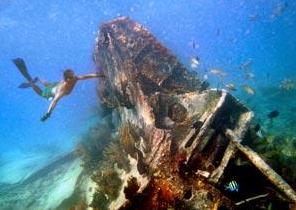
Government Documents just received a copy of Comet: submerged Cultural Resources Site Report, Channel Islands National Park. (I 29.143/2:17) It's an amazing story of how an old lumber schooner (named the Comet) came to be shipwrecked on a beach in Simonton Cove, San Miguel Island, Channel Islands National Park in 1911. This is an island off the coast of Santa Barbara, California. Click on the title above to access the United States Parks Service website of submerged cultural resources (shipwrecks).

Thursday, July 06, 2006

Tuberculosis


TB is not something most Americans worry about, but it probably should be.
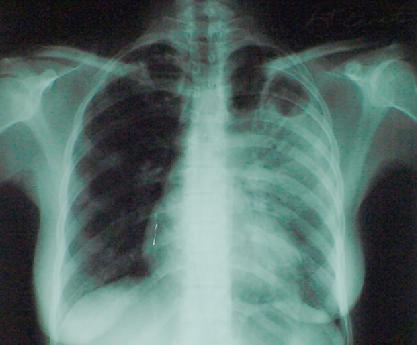
According to the Worldwide Health Sourcebook (R 362.1 W893), nearly 2 billion people have tuberculosis, or are carriers. This is one-third of all the people on earth. This number includes the 10 to 15 million people who have the disease in the United States.

According to the above source, TB is the world's leading cause of death from a single organism, killing more adults than AIDS and malaria combined. The bad news is that the disease is becoming more resistant to drugs. The good news is NIAID scientists are trying to isolate the complete sequence of the TB bacterium's genome.

Click on the title above to visit the World Health Organization website on TB.

Tuesday, June 27, 2006

Tudor Sedans Popular in England in 1500s?


Ever take an exam and get similar words confused? Some words which seem kind of the same have totally different meanings: Gaza, Ginza, and Giza. You could even throw in the word Ginzu if you wanted to.

Gaza is the strip of Palestinian land between Israel and the Mediterranean Sea. Ginza is the rich shopping district in Japan. Giza is the location of the Great Pyramids in Egypt. Ginzu is the brand of knives shown on shopping channels late at night, which can be purchased for only 3 easy payments of $29.95. And now you know the rest of the story.

Click on title above to see dictionary definition of Tudor.

Tuesday, June 20, 2006

Job Outlook


For the undergraduate who can't decide what field to enter... Take a look at the 2006-07 Occupational Handbook located at the reference desk in the Al Harris Library . You might be surprised at the number of job openings predicted between 2004 and 2014 for certain professions. Click on title above to see labor force projections up to 2014 from additional source (Monthly Labor Force Review.)

Monday, June 12, 2006

Field Guide to Oklahoma's Amphibians and Reptiles


The 2005 version of "A Field Guide to Oklahoma's Amphibians and Reptiles" (by Greg and Lynnette Sievert) is now at the Al Harris Library in Government Documents
(W 2800.5 F453a 2005.) This is a very interesting book - even for people who hate snakes! Think that you know a lot about Oklahoma reptiles? Take this 6 question True or False quiz:

1. There are more than 4 types of rattlesnakes in Oklahoma.
2. Some Oklahoma snakes kill their prey by constricting.
3. The Texas horned toad is in decline and is a protected species.
4. The Texas horned toad can squirt blood from their eyes when disturbed.
5. There are 17 types of turtles in Oklahoma!
6. The American Alligator is native to parts of Oklahoma.

5/6 correct = you're an expert. 4 correct = very good. 3 correct = average. 2 correct = fair. 1 correct = time to move to Rodeo Drive. Answers: all T.

Click on the Title above to link to the Oklahoma Snakes website.